10 KPIs every sports federation should measure monthly
Without data, a federation navigates blind. These are the 10 operational, financial and impact indicators every sports federation should track month by month, with formulas and interpretation.
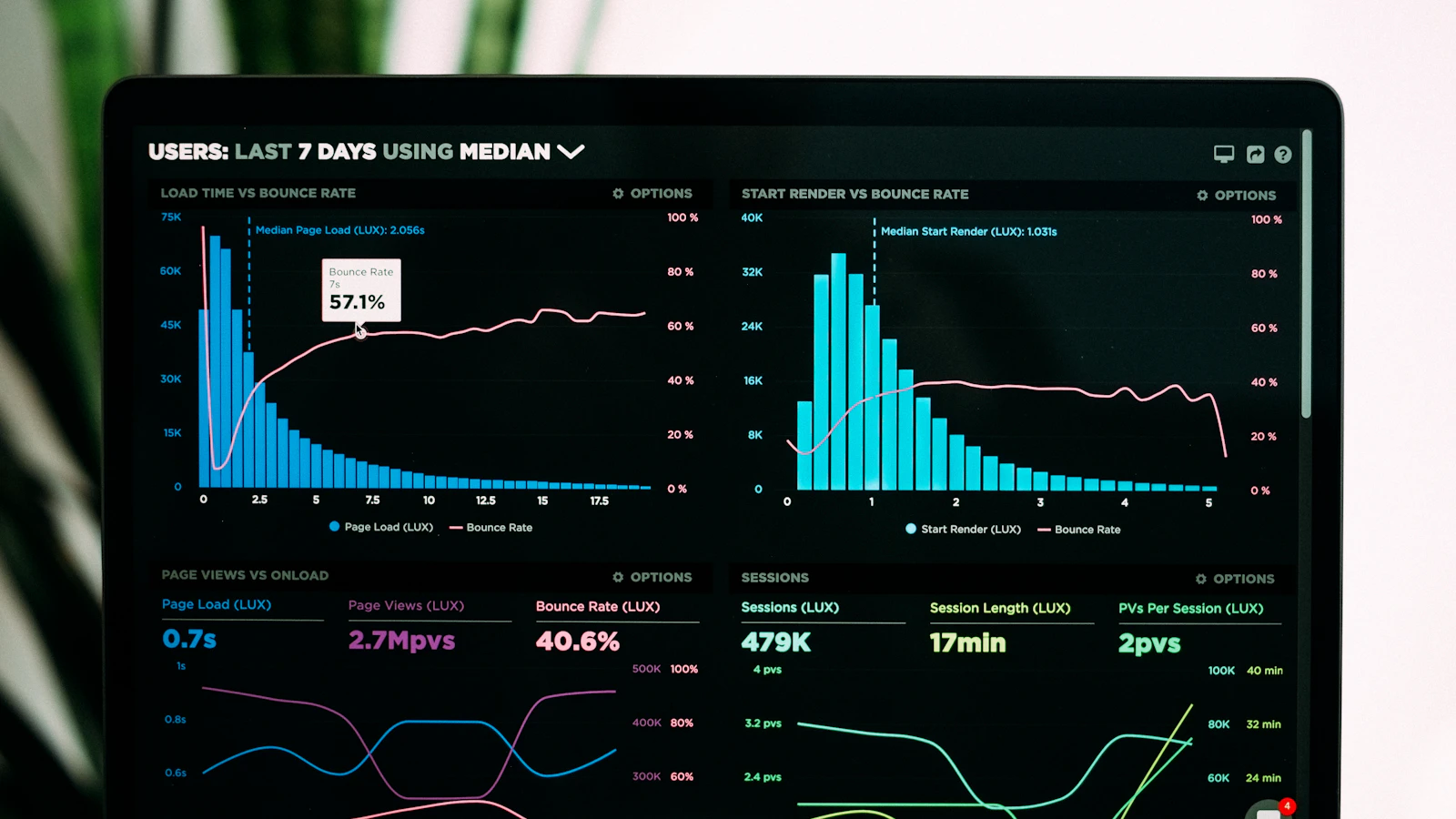
Every sports federation collects data. Few federations use it. License counts appear in the annual report. Revenue figures go to the treasurer. Participation numbers surface when a grant application demands them. But the data arrives late, in inconsistent formats, and nobody has defined what “good” looks like.
The result is governance by instinct: decisions based on the president’s experience and the treasurer’s gut feeling. This works until a declining modality goes unnoticed for three years or a payment crisis reveals that 15% of clubs are chronically late.
Here are ten KPIs every sports federation should track monthly, with formulas, benchmarks and the breakdowns that turn numbers into action.
KPI 1: Active license count
Formula: Count of licenses with status = active on the last day of the month.
What it tells you: The size of your active membership. This drives revenue, insurance coverage, competition participation and political representation before government bodies.
Benchmarks: The absolute number depends on sport and territory. What matters is year-over-year comparison. Stable or growing is healthy. Declining by more than 5% YoY requires investigation.
Breakdowns: by modality, age group, gender, club and geographic zone. A federation with stable totals may be losing juniors and gaining veterans, signaling future decline.
KPI 2: Annual renewal rate
Formula: (Licenses renewed this season / Licenses active at end of previous season) x 100
What it tells you: Member loyalty and satisfaction.
Benchmarks:
- Above 90%: excellent retention. Focus on new acquisition.
- 85-90%: healthy but worth investigating non-renewal reasons.
- 80-85%: warning zone. Exit surveys and retention campaigns needed.
- Below 80%: crisis. Something systemic is driving members away.
Breakdowns: by modality, age group, club and years of membership. First-year members always have the lowest rate; multi-year members should exceed 95%.
KPI 3: Average new license activation time
Formula: Mean time from application submission to license status = active, in hours.
What it tells you: How much friction your administrative process creates. Slow activation frustrates members and delays competition eligibility.
Benchmarks:
- Under 24 hours: good automation with minimal manual intervention.
- 1-3 business days: acceptable if manual document review is required.
- 3-5 business days: slow. Identify and eliminate bottlenecks.
- Over 5 business days: unacceptable.
Breakdowns: by process step (document upload vs. payment vs. approval), by type (new vs. renewal) and by club.
KPI 4: Monthly federation revenue
Formula: Total revenue received in the calendar month from all sources.
What it tells you: Financial health and seasonal patterns. Revenue peaks during renewal periods and dips between them.
Benchmarks: Compare to the same month last year, adjusted for fee changes. Revenue growing slower than license count may indicate collection problems.
Breakdowns: by source (license fees, competition fees, grants, sponsorship), by club, by modality and by payment method (card vs. transfer vs. direct debit).
KPI 5: Late payment rate
Formula: (Fees outstanding more than 30 days past due / Total fees invoiced) x 100
What it tells you: Financial discipline of your club network and collection process effectiveness.
Benchmarks:
- Below 2%: excellent.
- 2-5%: normal for mixed payment methods.
- 5-10%: needs attention. Identify chronic late payers.
- Above 10%: urgent. Consider mandatory card payments and automated reminders.
Breakdowns: by club, by payment method (bank transfers are almost always later) and by fee type.
KPI 6: Cost per license issued
Formula: Total administrative costs / Total licenses issued
Administrative costs include staff salaries (proportional to license admin time), software subscriptions, printing, postage and bank fees.
What it tells you: Operational efficiency. This number should decrease as digitization automates manual steps.
Benchmarks: Small federations (under 1,000 licenses) might see 8-15 EUR. Large ones (over 10,000) should target 2-5 EUR. The trend matters more than the absolute number.
Breakdowns: by cost component (staff vs. software vs. postage vs. banking) and by license type (new licenses cost more than renewals).
KPI 7: Member satisfaction (NPS)
Formula: % Promoters (9-10 rating) minus % Detractors (0-6 rating)
Captured through one question: “On a scale of 0-10, how likely are you to recommend our federation to a fellow athlete?” Sent after key interactions like renewal or competition registration.
Benchmarks:
- Above 50: excellent. Members are advocates.
- 30-50: good, with room to improve.
- 0-30: average. Understand detractor concerns.
- Below 0: crisis. More members would warn others away than recommend you.
Breakdowns: by club, modality, tenure and age group. Add an optional free-text field for qualitative feedback.
KPI 8: Club satisfaction (CSAT)
Formula: (Club officers rating 4 or 5 on a 1-5 scale / Total respondents) x 100
What it tells you: How well the federation serves its operational partners. Dissatisfied clubs provide poor member service, resist new tools and eventually disengage.
Benchmarks:
- Above 85%: solid base.
- 70-85%: acceptable but investigate the dissatisfied minority.
- Below 70%: significant relationship problems. Conduct in-depth interviews.
Breakdowns: by club size, region and survey dimension (support quality, communication, software usability, fee transparency).
KPI 9: Software uptime and support response time
Formulas:
- Uptime = (Total minutes - Unplanned downtime minutes) / Total minutes x 100
- Response time = Mean time from ticket creation to first substantive response
Benchmarks:
- Uptime above 99.5%: acceptable (~3.6 hours downtime/month).
- Uptime above 99.9%: excellent (~45 minutes/month).
- Support response under 4 hours: good for business hours. Critical issues under 1 hour.
- Response over 24 hours: unacceptable.
Breakdowns: by time of day, severity and ticket category (bug, feature request, how-to, data issue).
KPI 10: Sporting impact (unique competition participants)
Formula: Count of unique persons who participated in at least one official competition in the period.
What it tells you: Whether the federation is fulfilling its core mission. Licenses are the mechanism; competition is the purpose.
Benchmarks: Express as participation rate (unique participants / active licenses x 100). Above 60% indicates a competition-oriented federation. Below 30% suggests most members hold licenses for recreation or insurance.
Breakdowns: by modality, competition type, age group, gender and geography. Track year-over-year to detect emerging or declining competitive interest.
Turning KPIs into action
Define thresholds
For each KPI, establish three zones: green (on target, no intervention), yellow (outside expected range, investigation needed), red (crisis, immediate action required). Document thresholds and review them annually.
Assign owners
Every KPI needs one person responsible for monitoring it and raising alerts.
| KPI | Typical owner |
|---|---|
| Active license count | General secretary |
| Renewal rate | Membership director |
| Activation time | Operations manager |
| Monthly revenue | Treasurer |
| Late payment rate | Treasurer |
| Cost per license | Operations manager |
| Member NPS | President |
| Club CSAT | Club relations director |
| Uptime / Support | IT coordinator |
| Sporting impact | Competition director |
Review cadence
- Weekly: operational KPIs (activation time, uptime) reviewed by staff.
- Monthly: all ten KPIs reviewed by the executive committee in 30 minutes.
- Quarterly: deep-dive analysis with segmented breakdowns for the board.
- Annually: full review at the general assembly with trends and strategic implications.
Five common KPI mistakes
1. Measuring what is easy, not what matters
Tracking emails sent or forms processed tells you how busy the office is, not whether the federation is achieving its goals. Focus on outcomes, not activity.
2. Single-number obsession
Reporting “we have 5,000 licenses” without breakdowns hides more than it reveals. Every KPI must be segmented to be useful.
3. Year-over-year without context
Comparing this September to last September is meaningless if the federation changed fees, added a modality, or merged with a neighbor. Note contextual changes alongside every comparison.
4. No segmentation by club
A 92% renewal rate looks excellent until you discover 10 of 80 clubs are below 70%. Identify outliers and address them individually.
5. KPIs buried in Excel
If KPIs live in a spreadsheet that one person updates quarterly, they are historical curiosities. Effective KPIs are calculated automatically from real-time data and displayed on accessible dashboards.
Conclusion
A federation that measures these ten indicators monthly, segments them properly, and acts on the results will outperform its peers in retention, financial health, efficiency, satisfaction and sporting impact. The KPIs themselves are straightforward. The discipline of tracking them consistently, reviewing them honestly, and acting on what they reveal is what separates well-governed federations from those that navigate blind. Expert judgment sets the direction; rigorous measurement keeps it on course.